TOEIC - Level 5
Tags: toeic
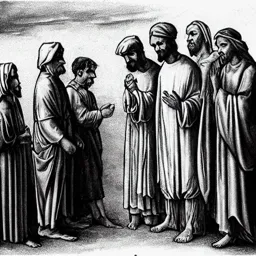
The text says that a true inner change is hard for a person who does not know God, and talk about peace is empty unless this change happens. It points out that even in war, some soldiers find new strength and caring, while people who stay at home often stay angry and untouched. Meeting God can show a person his mistakes, but it also gives him the power to act with love and compassion toward others. The author believes more and more people are waking up to this choice and that churches are places where life’s big moments are linked to that spirit of love. He ends by asking God to guide us toward a world of peace and love.
- revolution
- Definition: A profound inner transformation that a person undergoes, especially when moving from a life without God to one with spiritual purpose.
- Example: “He realized that a true revolution inside himself was needed before he could embrace peace and reconciliation.”
- compassion
- Definition: The deep empathy and caring for others that emerges even amid war, as described by soldiers facing fundamental truths.
- Example: “In the midst of conflict, many soldiers discovered new sources of strength and compassion.”
- integrity
- Definition: The honest acknowledgment of one’s own failures when confronting God, leading to moral wholeness.
- Example: “Meeting God shows a man his failures and his lack of integrity, urging him toward love.”
- sacrifice
- Definition: The act of destroying oneself or humanity by choosing a false deity over the true God.
- Example: “Man possesses the power to obliterate himself, sacrificing the whole race on the altar of some God‑substitute.”
- purification
- Definition: The process of being cleansed and redirected toward God’s kingdom of love and peace through prayer.
- Example: “We pray God that he may purify, enlarge and redirect these in the ways of his kingdom of love and peace.”
- What does the author claim about a man who lacks belief in God?
- He is less than man.
- He is more enlightened.
- He is completely self‑sufficient.
- He is immune to violence.
- Who does the passage describe as often being the most violent in their attitudes?
- Soldiers fighting in the war.
- Spectators who remain at home.
- Religious clergy.
- Political leaders.
- According to the text, what effect does meeting God have on a person?
- It reveals failures and provides strength to act with love and compassion.
- It guarantees material prosperity.
- It removes all personal doubts.
- It eliminates the need for human relationships.
- How are cathedrals and churches portrayed in the passage?
- As venues for military planning.
- As places where human experiences such as birth, marriage, and death are brought.
- As centers for commercial trade.
- As locations for political campaigning.
- What does the author ask of God at the conclusion of the text?
- To purify, enlarge and redirect our thanksgiving, sorrows and aspirations toward love and peace.
- To endorse ongoing conflict.
- To abandon all religious practices.
- To focus solely on personal ambition.
- Do you agree with the statement “Man without God is less than man”? Why or why not?
- Have you ever felt a personal “revolution” inside yourself after a difficult experience? Share your story.
- What might happen to a society if many people chose “God‑substitutes” instead of a partnership with God, as the author suggests?
- Why does the author say that spectators at home can be more violent in their attitudes than soldiers on the front line?
- The author claims peace and reconciliation are only possible after an inner revolution. Do you think peace can be achieved without such a personal change? Explain.
- Is it fair to say that churches and cathedrals are the only places where people can connect with God? Why or why not?
- Imagine a conversation between a soldier who found compassion in war and a home spectator who remains violent. Write three lines of dialogue they might say.
- If you could redesign the ending of the author's message, what would you add to make the call for peace stronger?
- The author talks about “the power to obliterate himself, sacrificing the whole race.” Do you think individuals have that much influence over the future of humanity? Why?
- What personal actions can you take today to “purify, enlarge and redirect” your hopes toward love and peace, as the author asks?

Robert Runcie: ‘After the Falklands War’ (2)
Man without God finds it difficult to achieve this revolution inside himself. But talk of peace and reconciliation is just fanciful and theoretical unless we are prepared to undergo such a revolution.
Many of the reports I have heard about the troops engaged in this war refer to moments when soldiers have been brought face to face with what is fundamental in life and have found new sources of strength and compassion even in the midst of conflict. Ironically, it has sometimes been those spectators who remained at home, whether supporters or opponents of the conflict, who continue to be most violent in their attitudes and untouched in their deepest selves. Man without God is less than man.
In meeting God, a man is shown his failures and his lack of integrity, but he is also given strength to turn more and more of his life and actions into love and compassion for other men like himself. It is necessary to the continuance of life on this planet that more and more people make this discovery. We have been the choice. Man possesses the power to obliterate himself, sacrificing the whole race on the altar of some God-substitute, Or he can choose life in partnership with God the Father of all.
I believe that there is evidence that more and more people are waking up to the realization that this crucial decision peers us in the face here and now. Cathedrals and churches are always places into which we bring human experiences – birth, marriage, death, our flickering communion with God, our fragile relationships with each other, so that they may be deepened and directed by the spirit of Christ.
Today we bring our mixture of thanksgiving, sorrows and aspirations for a better ordering of this world. Pray God that he may purify, enlarge and redirect these in the ways of his kingdom of love and peace. Amen.


