A listener from Poland asked VOA to recommend a good American university because many schools claim to be the best and it is hard to choose. VOA says that picking a school is a personal decision, but they will help by starting a “Foreign Student Series” that gives useful information about studying in the United States. The series will explain how the U.S. higher‑education system works, describe campus life, tell about tuition, scholarships, admission tests and English requirements, and show how to become an international student. New episodes will be released every two years and will be saved online for anyone who misses them. Listeners are invited to send their questions and ideas to VOA Special English.
- universities
- Definition: American higher‑education institutions that offer degree programs, sometimes through online or overseas campuses, as mentioned in the text.
- Example: “There are many American universities and colleges that provide long distance education to the world.”
- foreign
- Definition: Pertaining to students or listeners who are not from the United States, the target audience of the series.
- Example: “Our Foreign Student Series is for anyone interested in higher education in America.”
- program
- Definition: A structured course of study or set of classes offered by a university, especially those delivered via the Internet.
- Example: “Many programs are offered over the Internet.”
- admissions
- Definition: The process and requirements for entering a university, including tests and language criteria.
- Example: “We will talk about admissions tests and English language requirements.”
- financial
- Definition: Related to money assistance that helps students cover the cost of their education.
- Example: “We will talk about financial aid and employment.”
- What difficulty does Slawek Loboda describe when searching for American universities?
- The cost of tuition is too high.
- All universities claim to be the best, making choice confusing.
- There are no online programs available.
- Universities do not accept foreign students.
- How frequently will the Foreign Student Series be refreshed with new information?
- Every six months.
- Annually.
- Every two years.
- Every five years.
- According to the report, the United States has more than how many colleges and universities?
- One thousand.
- Two thousand.
- Three thousand.
- Four thousand.
- Which of the following subjects is NOT mentioned as part of the upcoming series?
- Student life on campus.
- Financial aid options.
- Detailed curriculum of every major.
- English language requirements.
- If a listener wants to suggest topics or ask questions, which method is listed in the report?
- Call a toll‑free number provided in the broadcast.
- Send an e‑mail to special@voanews.com.
- Post a comment on the VOA Facebook page.
- Fax a letter to the Washington, D.C., office.
- Do you think you would trust VOA’s recommendation on American universities? Why or why not?
- Have you ever looked for an online university program? What was your experience?
- Why does the article say that choosing a school is an “individual decision”? What factors might influence that decision?
- How might the September 11 attacks have changed the rules for international students in the United States?
- Is it more important for foreign students to focus on the reputation of a university or the cost of tuition? Explain your view.
- Should universities be allowed to claim they are “the best” in their marketing? Why or why not?
- If you could design a new episode of the Foreign Student Series, what topic would you choose and why?
- Imagine you are writing an email to VOA asking for a university recommendation. What three questions would you include?
- What do you think are the biggest difficulties for a student who wants to study in the U.S. without being physically present?
- What are the advantages and disadvantages of having American university campuses in other countries, according to the article?

An Introduction
This is the VOA Special English EDUCATION REPORT .
A listener in Poland recently sent us an e-mail. Slawek Loboda writes: “There are many American universities and colleges that provide long distance education to the world. The trouble is that each university says that it is the best. After an hour of searching and reading what they have in their offer, one gets a headache. You simply don’t know whom to trust and what to choose.”
Slawek goes on to say, “I have been listening to VOA for years and I would trust you if you made an interesting program about American universities for foreigners. Is there a university that you could recommend?”
Well, choosing a school is an individual decision. But we may be able to help inform that decision.
Slawek’s letter happened to come at just the right time. It gives us the perfect opening for not just one program, but a series — our Foreign Student Series. We update the series every two years to provide fresh information for anyone interested in higher education in America.
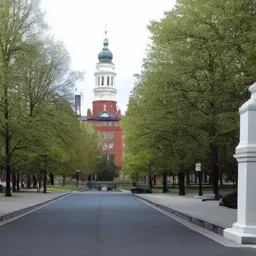
The United States has more than four thousand colleges and universities to choose from. They come in all sizes — from a few hundred students to enough to populate a city. And students may not even have to be in the United States to take classes. Some universities have campuses in other countries. And, as Slawek pointed out, many programs are offered over the Internet.
Over the coming weeks, we will talk all about the American system of higher education. Our reports will take you inside some of the nation’s colleges and universities. We will explore programs of study and report on student life. We will talk about financial aid and employment, and about admissions tests and English language requirements.
We will also explain the process for becoming an international student in the United States. And we will talk about how the terrorist attacks of September eleventh, two thousand one, changed some of the rules.
Many of the subjects in our Foreign Student Series are based on your questions and suggestions. So keep them coming! Send e-mail to special@voanews.com, or click on the Contact Us link at voaspecialenglish.com. Or write to VOA Special English, Washington, D.C., two zero two three seven U.S.A.
In case you miss any of the programs, our Foreign Student Series will be archived at voaspecialenglish.com. And that’s the VOA Special English
EDUCATION REPORT
, written by Nancy Steinbach. I’m Steve Ember.
Related Articles

A Young Couple's Life in the USA
61 Pages
Articles
56 Pages
TOEIC - Level 1
115 Pages