TOEIC - Level 4
Tags: toeic
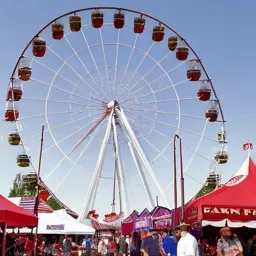
Fall fairs have been a North‑American tradition since the early 1800s, when farmers gathered after the harvest to show off their best crops, animals and homemade goods. Most fairs are held by counties or states and take place from August to November, lasting several days in large barns that hold livestock, produce, crafts, and a stage for music, comedy and other shows. Competitions such as animal judging, ploughing, pie‑eating and beauty contests encourage farmers to improve their products, and winners receive ribbons or prizes. The fairs also include a midway with rides, games, and food, making them fun for the whole family, even for people who no longer live on farms. Today the events are a celebrated part of North‑American heritage.
- Fair
- Definition: An annual public gathering, especially in rural areas, where people display farm products, animals, and hold contests and entertainment.
- Example: The county fair attracted dozens of farmers showing their best crops and livestock.
- Competition
- Definition: A contest held at the fair to judge the quality or performance of farm products, animals, or skills.
- Example: A ploughing competition tested the strength and steadiness of the horses.
- Grandstand
- Definition: A raised stage area with wooden seating where performers entertain the fair audience.
- Example: The country singer took the grandstand and sang for the crowd.
- Midway
- Definition: The part of the fair that contains rides, games of chance and skill, and other circus‑like attractions.
- Example: Children laughed as they rode the Ferris wheel on the midway.
- Four-H
- Definition: Youth organizations that encourage farm children to develop skills and interest in agriculture and personal growth.
- Example: The local Four-H club taught kids how to raise healthy chickens.
- According to the passage, the earliest month a fall fair might begin is
- July
- August
- September
- November
- Which of the following performers is NOT listed as appearing on the grandstand stage?
- Country and western singers
- Circus acrobats
- Clowns
- Dancers
- Which organization’s goal includes improving the “heads, hearts, hands and health” of its members?
- Women’s Institutes
- Four‑H Clubs
- Farmers Alliance
- Rotary Club
- What is the main function of the large barn‑like structures at the fairs?
- To display new farm products
- To house the grandstand
- To provide food service
- To serve as ticket booths
- According to the text, which group is most likely to enjoy the machinery exhibits?
- Children
- Women
- Men
- Elderly
- Do you think fall fairs are still important today? Why or why not?
- Have you ever visited a fair or a similar event? What did you enjoy most?
- Why do you think competitions for the best crops and animals help improve farming?
- How might the location of a fair (county vs. state) affect the types of exhibits shown?
- Some people say the midway rides are the best part of a fair, while others value the agricultural displays more. Which do you think is more important and why?
- Should governments continue to fund fall fairs as a way to support agriculture? Explain your view.
- Imagine you are designing a new exhibit for a modern fair. What would you showcase and how would you present it?
- If you could add one new competition to the fair, what would it be and what would the rules be?
- In the article, women and men have different favorite parts of the fair. Do you think these preferences still exist today? Why or why not?
- What might happen to the quality of farm products if fairs stopped offering prizes and ribbons?

Come to the Fair
Fall fairs have been a feature of North American life since early in the nineteenth century. At the end of the harvest, people from rural areas have come together to celebrate. Usually, these fairs take the form of a competition regarding the best of all farm products of that year. Depending on the part of the country, and its most important crop, fall fairs can begin as early as August or as late as November. They usually last several days.
When the United States and Canada were organized, they were divided into small units called counties. Larger units were called states or provinces. Many of the best-known fairs are county fairs or state fairs. There are also smaller local fairs, and larger ones too, like the Canadian National Exhibition in Toronto, Ontario.
Since these fairs are usually annual events, many have developed permanent buildings over the years.
Most of these are large barn-like structures. These buildings are used to display new products for farm life, such as tractors, home furnishings and water systems.
Several barns are usually necessary to house all the horses, cows, pigs, goats, sheep, chickens and other animals in competition. There must also be room to display all the vegetables, berries and fruits in competition. Finally, there is space for handicrafts, artwork, baked goods, and jams and jellies.
Usually, there is a grandstand, which is a stage with wooden seats around it. Here entertainers perform for an audience during the fair. Country and western singers are usually popular at fairs, but so are comedians, clowns, dancers and musicians. There may also be other contests such as a beauty competition for queen of the fair, tests of strength for the men or pie-eating events. Most fairs also have a racetrack, which is used for horse racing, or, in some cases, auto-racing.
Fairs have helped to improve animal breeds, and races encourage the breeding of fast horses.
Ploughing contests test the strength and steadiness of horses, and so do pulling contests. This spirit of competition has led to improvements in all areas of farming. Every kind of grain, fruit, vegetable, berry and animal is tested, and only the best win a ribbon.
This encourages fairness to improve their products. Farm women compete to produce the best homemade food and crafts. Many kinds of fruit and vegetables are stored in glass jars for the winter.
The best of these also receive prizes. Most fairs have a dining area where this good food is served to the public.
The goal of improving farming is sponsored by the governments of Canada and the U.S.A. Four-H Clubs are youth organizations that encourage farm children to take an interest in farming. Four-H Clubs aim at improving the heads, hearts, hands and health of their members. There are also women’s organizations, such as the Women’s Institutes in Canada, which work to make the life of farm families better. Fall fairs have taken over the idea of the midway from the circus. The midway has rides like Ferris wheels, merry-go-rounds, and roller coasters. It also has games of chance and skill, such as trying to throw a small hoop over a large bottle. One nice thing about fall fairs is that they are fun for the whole family. Children enjoy the midway and the farm animals. Women like the crafts, food and household exhibits. Men like the machinery, the horse races and the crop exhibits. Everyone likes the grandstand shows. Nowadays, not so many people live on farms. But people from towns and cities still enjoy going to fall fairs. They are part of our North American heritage.
Related Articles

TOEIC - Level 1
115 Pages
Words and Their Stories
100 Pages
English Listening Rocks
62 Pages