TOEIC - Level 3
Tags: toeic
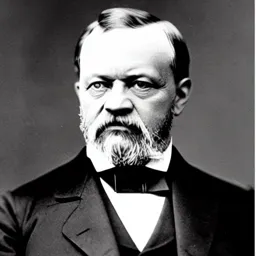
Louis Pasteur was a French scientist born in 1822 who studied chemistry and later learned that tiny invisible germs could cause many diseases. He showed doctors that washing their hands before treating patients could stop the spread of illness. Pasteur created two important methods: pasteurization, which heats drinks like milk to kill germs, and immunization, which uses weak germs to teach the body to fight a disease. Using immunization, he saved a young boy who had been bitten by a rabid dog. Pasteur died in 1895 and is still celebrated as one of the most important figures in medicine.
- pasteurization
- Definition: a technique developed by Pasteur that kills germs in drinks such as milk or beer.
- Example: Pasteurization kills the germs that are found in drinks such as milk or beer.
- immunization
- Definition: a method where weakened germs are injected to make a person or animal immune to a disease.
- Example: Pasteur found that a person or animal could be made safe, or immune, from a disease, by injecting the person with some weakened germs.
- germs
- Definition: extremely small, invisible organisms that can cause diseases.
- Example: Pasteur was one of the first scientists to understand that many diseases could be caused by extremely small, invisible organisms.
- rabies
- Definition: a disease that affects animals, usually fatal, causing aggression and the potential to spread the disease by biting.
- Example: Rabies is a disease that sometimes occurs in animals; it usually kills the animal and may spread the disease by biting a person.
- spontaneous generation
- Definition: the idea that life forms could appear on their own without existing organisms, which Pasteur disproved.
- Example: Pasteur also demonstrated that life forms did not arise spontaneously.
- In what year was Louis Pasteur born?
- 1822
- 1895
- 1800
- 1850
- In which city did Pasteur study science at university?
- Paris
- Lyon
- Marseille
- Bordeaux
- What is the name of the technique that kills germs in drinks such as milk or beer?
- Pasteurization
- Fermentation
- Distillation
- Filtration
- According to the text, what does immunization involve?
- Injecting the person with weakened germs
- Washing hands before treating patients
- Exposing the person to the disease
- Eating contaminated food
- Which disease did Pasteur successfully treat a boy for using immunization?
- Rabies
- Tuberculosis
- Cholera
- Influenza
- Do you think Pasteur’s work is still important today? Why or why not?
- Have you ever thought about how germs affect your daily life? Share an example.
- What might have happened to public health if Pasteur had not discovered pasteurization?
- Why do you think Pasteur advised doctors to wash their hands before treating patients?
- Some people think immunization should be mandatory. Do you agree or disagree? Explain.
- Is it more important to prevent disease (like pasteurization) or to treat disease (like the rabies vaccine)? Why?
- Imagine you could travel back in time and meet Louis Pasteur. What three questions would you ask him?
- If Pasteur had used a different method than weakening germs for immunization, how might vaccine development be different?
- Have you or someone you know ever benefited from a vaccine? How did it feel?
- How did Pasteur’s idea that life does not arise spontaneously change scientists’ view of the world?

Louis Pasteur
Louis Pasteur was one of the greatest scientists of all time. Pasteur made very important discoveries in biology and chemistry, and the techniques he developed helped greatly to develop medical science and the agricultural and food industries.
Pasteur was born in a small town in France during the year 1822. When he was a young man, Pasteur studied science at a university in the city of Paris. He soon did some excellent work in chemistry, and later began his famous study of germs.
Pasteur was one of the first scientists to understand that many diseases could be caused by extremely small, invisible organisms. Only a few other scientists had believed this before Pasteur. He advised doctors to wash their hands thoroughly before treating patients.
Pasteur also demonstrated that life forms did not arise spontaneously. His research confirmed the idea, developed by previous scientists, that a living organism would not appear unless other individuals of its kind were present.
One of Pasteur’s most important contributions was a technique that has been named after him:
pasteurization. Pasteurization kills the germs that are found in drinks such as milk or beer. Because of Pasteur’s technique, people are no longer infected with diseases by drinking these liquids.
Just as important as pasteurization was a technique called immunization. Pasteur found that a person or animal could be made safe, or immune, from a disease, by injecting the person with some weakened germs that cause the disease. The body can resist the disease after being immunized in this way. Today, many diseases are prevented by the use of this technique.
Pasteur’s discoveries also helped to save people who had already been infected with diseases. One such disease is rabies. Rabies is a disease that sometimes occurs in animals. This disease usually kills the animal, but before dying, the animal becomes very aggressive, and may spread the disease by biting a person or another animal.
One day, the parents of a young boy came to Pasteur. Their son had been bitten by a dog that had the rabies disease. The parents knew that their son would die from the disease, unless something could be done to save him. Pasteur agreed to help the boy, and the immunization technique saved the boy’s life.
Pasteur died in 1895. He was greatly admired around the world for his achievements, which have helped all of humankind. Today, Pasteur is considered to be the greatest figure in the history of medicine.


